Resume / Curriculum Vitae
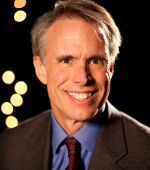
Steve Bratt
TECHNOLOGY EXECUTIVE
GLOBAL LEADERSHIP | INNOVATION
| IMPACT
Senior Executive
with 20+ years of success in driving change with technology at
the international level. Directed initiatives to build
international organizations and boards, create next-generation
technologies and software systems, and improve access to
information for people around the world. Cross-functional leader
in commercial, government, and non-profit environments.
ORGANIZATION AND BOARD CREATION, LEADERSHIP AND GROWTH
SOFTWARE ARCHITECTURE AND IMPLEMENTATION
FINANCIAL, RELATIONSHIP AND CHANGE MANAGEMENT
INTERNATIONAL BUSINESS – PROCESS IMPROVEMENT
OPEN SOURCE AND STANDARDS – WEB – BIG DATA – IoT – MOBILE
Ph.D., Massachusetts Institute of Technology
(top)
Professional Experience
GS1 (2012 - present)
Princeton, New Jersey and Brussels, Belgium
GS1 is the international non-profit organization that develops open, technical standards for identifying just about everything (products, assets, services, entities, people, places). This includes the world's barcodes (40 years old in 2013), RFID tags (e.g. on products, shipping containers, cars, medical devices, coupons, runners, etc.) and the registry services that allow these identifiers to be created, to be shared, and to make the world a more efficient place. GS1 has a presence in over 100 countries. Close to 2 million companies are members of GS1.
Steve is President of the EPCglobal Board of Governors and Innovation Board (including Google, P&G, Walmart, JM Smuckers, MIT and others), and responsible for the Global Standards Management Process (GSMP), the GS1 Innovation Network, technology strategy, data systems development, corporate information technology and the Princeton office.
(top)
World Wide Web Foundation (2008 -
2012)
Geneva, Switzerland and Boston, Massachusetts
Chief Executive Officer
The Web Foundation drives high-risk, high-impact initiatives to
connect and empower all people for whom communication could be
life-changing.
Launched the Foundation, together with Web inventor Sir Tim
Berners-Lee. Led initial business strategy and launch
plan. Headed operations and finances while serving a combination
of C-level functions. Managed two international offices
and staff
based in the US, Europe and Africa. Accountable to two Boards of
Directors and multiple funders and beneficiaries.
- Secured $5M grant for Foundation launch, and additional $8M for research and field projects. Initial donors included the Knight Foundation, Google, Vodafone, Nokia, Rockefeller Foundation, Hewlett Foundation, Omidyar Network, Open Society Foundations, European Commission, World Bank and International Press Institute.
- Formed legal entities in the US and Switzerland, and established Boards of Directors, Advisory Council, and Science Council.
- Created and executed innovative initiatives:
- Voice-based Web connectivity using simple mobile phones.
- Training mobile Web entrepreneurs in developing countries.
- Publishing government data on the Web to improve transparency, services and commerce.
- Initial testing in Burkina Faso, Ghana, India, Kenya, Mali and Senegal, with expansion expected.
- Created the Web Index, a world-first measure of the Web’s global economic, social, and political impact.
(top)
World
Wide Web Consortium (W3C) (2002 - 2009)
Computer Science and
Artificial Intelligence Laboratory , Massachusetts Institute of
Technology
Cambridge, Massachusetts
Chief Executive Officer
The World Wide Web Consortium is where the world’s leading
organizations develop the technologies that make the Web work,
including HTML, XML, CSS, VoiceXML, SOAP, RDF, Web
accessibility, internationalization and privacy.
Executive leadership of all governance, technical and financial
functions. Developed strategic plans and organizational goals.
Coordinated the W3C Advisory Board (included IBM, Microsoft,
Oracle, HP, Google, Mozilla, Boeing and others). Oversaw process
governing development of open standards by 1,500 technologists
within 60
working groups. Directed team of 60 noted professionals
based in 20
offices around the globe to coordinate Web standards and
develop open source software.
- Launched new standards work around HTML5, Web services, Web 2.0, semantic Web (linked data), mobile Web, multimodal, voice, video, security, social networking and health care and life sciences.
- Oversaw creation of open source tools to support one of the best environments for standards development in the world. Opened new offices in Brazil, China, India, South Korea, Senegal, and South Africa.
- Improved relationships with W3C's 400 member companies, universities, non-profits and governmental agencies including: Adobe, Alcatel-Lucent, Apple, AstraZeneca, AT&T, Avaya, Boeing, BT, Canon, Chevron, Cisco, Citigroup, Deutsche Telecom, Disney, Dow Jones, Eli Lilly, EMC, Ericsson, France Telecom, Fujitsu, Google, Hitachi, HP, IBM, ILOG, Intel, Merck, MITRE, Nokia, Novartis, NTT, Nuance, Oracle, Pfizer, RedHat, RIM, Samsung, SAP, Sharp, Siemens, SoftwareAG, Sun, Time Warner/AOL, Toshiba, Verisign, Vodafone, Xerox, and Yahoo.
- Increased membership and revenue, and reduced spending to improve long-term organization viability.
- Implemented industry-leading patent policy and created streamlined process to develop innovative technologies.
- Strengthened liaisons with over 40 national and
international standards bodies.
(top)
Comprehensive Nuclear-Test-Ban Treaty
Organization (CTBTO) (1997 - 2001)
Vienna, Austria
Coordinator, International Data Centre Division - IDC
The CTBTO is a UN-affiliated organization, founded in 1997 to a
build treaty verification regime to detect and deter global
nuclear weapons testing.
Appointed first Coordinator of the IDC, one of two senior US
executives on inaugural executive team. Guided the IDC and
Global Communications Infrastructure (GCI) to initial operation
in two years. Directed strategic planning as well as systems
design and deployment for $25M annual budget. Oversaw
information security and measurement-based quality
assurance. Hired and managed 100+ staff members from 40+
nations. Directed cross-divisional teams to implement
state-of-health and knowledge management systems that
communicated through open public, secure external and private
intranet Web interfaces. Communicated progress and plans to
stakeholders, global dignitaries, and technical experts.
- Successful implementation and operations led to increase of division funding from $15M/yr to $25M/yr.
- Implemented the world’s most sophisticated geophysical data collection and real-time analysis system. Leveraged knowledge-based, big-data fusion and human decision support to detect, locate and identify geophysical phenomena, including possible nuclear explosions.
- Designed and installed the GCI – the first VSAT satellite telecommunications system to cover the globe – to provide Internet-based data collection from 321 sensors, and Web-based product distribution to data centers in 100 nations.
- Designed and built operational facilities costing $11M, including 24/7 computing, situation, and media centers.
- Installed three major releases of data acquisition and knowledge-based processing software, using C++, Java, HTML, XML, PKI, LDAP, Oracle, UNIX and Windows.
(top)
Office of the Secretary of
Defense (1996 - 1997)
Defense Advanced Research Projects Agency (DARPA)
(1993 - 1996)
Arlington, Virginia
Principal Program Director, OSD / Program Manager,
DARPA
Directed $40M research
and development (R&D) program to improve US and global
nuclear-weapons-test-verification capabilities and ensure
test ban treaty compliance. Directed team of 100+ science
and engineering professionals in development of an
integrated system for collection, fusion and analysis of
multi-sensor data. Integrated advanced concepts for
real-time sensor surveillance and intelligent data
processing, including global telecommunications,
knowledge-based data fusion, artificial intelligence,
visualization, the Web, seismology, hydroacoustics,
infrasonics, nuclear physics, meteorology and satellite
imagery. Supported US delegation to treaty negotiations in
Geneva.
- Successfully demonstrated system during international experiments. Funding was increased from $15M/yr to $40M/yr.
- US Ambassador stated that Dr. Bratt’s briefings to international delegations did more to advance agreement on the treaty verification regime than any prior event.
(top)
Science
Applications
International Corporation (SAIC)
Center for Seismic Studies / Center for Monitoring Research,
Arlington, Virginia (1989 - 1993)
Geophysical Systems,
San Diego, California (1985 - 1989)
Assistant Vice-President, Director of Systems and
Support, Geophysicist
First hire in division which shortly thereafter became the
largest among all competitors. Directed 20 scientific and IT
professionals to design, implement, operate and improve
advanced geophysical real-time processing systems.
Designed and led development of the Intelligent Monitoring
System, which integrated automated real-time artificial
intelligence systems, interactive analysis, and decision
support. Directed installation, operation, and successful
testing of International Data Center (IDC) prototype during
worldwide monitoring experiment. Developed advanced prototypes
for pre-Web client-server-based data mining and browsing
tools. Directed international training, staffing, procurement,
monitoring operations and customer support. Successfully
presented strategic technical and funding proposals and
reports to high-level US and global officials.
(top)
Thinkabit, LLC
(2003 - present)
Winchester, Massachusetts
Consulting for startups and mature enterprises on open technology standards, World Wide Web, big data, cloud computing, corporate social responsibility, strategic planning, leadership, non-profit organizational development, patents, scientific and technical reviews, and application of advanced technologies to improve productivity.
(top)
Education
- Massachusetts Institute
of Technology: Ph.D., Geophysics
Thesis: "Thermal Tectonics of Planetary Lithospheres: Mid-Ocean Ridges and Lunar Impact Basins" (local copy)
- Pennsylvania State
University: BS., Geological Sciences
(top)
Executive Programs
- Harvard University, Cambridge, Massachusetts, Kennedy School of Government, Executive Management Program
- Federal Executive Institute, Charlottesville, Virginia, Leadership in a Democratic Society
(top)
Other International and Interagency Experience
- Advisory
Committee Representative, World Wide Web Consortium
(2010 - 2012)
- National Science Foundation ITR Review Panel (2004)
- US Delegation, Conference on Disarmament, Geneva (1993 - 1996)
- Scientific Advisor, Comprehensive Nuclear-Test-Ban Treaty Negotiations, Geneva (1994 - 1996)
- Head or Member, US Delegations for bi-lateral talks (1993 - 1997)
- DoD Liaison, National Academy of Sciences (1993 - 1997)
- Member and Participant, US inter-agency committees and task forces (1993 - 1997)
(top)
Honors
- Guest Professor, Beihang University, Beijing, China (2007 – 2012)
- Exceptional Civilian Service, US Department of Defense (1997)
- Outstanding Performance, Office of the Secretary of Defense (1993, 1994, 1995, 1996)
- Recognized Paper Award: Conference on Innovative Applications of Artificial Intelligence (1991)
(top)
Media, Talks and Publications
Dr. Bratt has given tens of interviews and
conference keynotes, including at TED and the World
Economic Forum; and has authored more than 100 publications, technical reports
and papers tabled within international organizations.
Selected, recent talks and interviews:
- Interview with CNN Tech: “How
many pages are on the internet?”
- Presentation at TED-U, Long Beach, CA: “Measuring the Web’s World Wide Impact”
- Panel Discussion at Economist’s Ideas Economy Conference: "Making Sense of the Deluge"
- Keynote at Names Not Numbers, New York, NY: “Internet and Power”
- Presentation at World Economic Forum on Africa, Cape Town, South Africa: “The Next Leap Forward”
- Interview with CNN Money: "Start of the Web Foundation"
- Keynote at RFID Academic Convocation, Cambridge, MA, "RFID-ed Things on the Web of Data and Services" (slides, video)
(top)
Additional Information
- LinkedIn: http://www.linkedin.com/in/stevebratt
- Twitter: @BrattTech (did all @webfoundation tweeting from 2009 to early 2012)
- Wikipedia page
- Running page
- Chief Running Officer, Winchester
Highlanders Road Running Club (past)
- Keyboardist in the band, SIX
(past)
- Place of birth: New York, New York, USA. Citizenship: USA
- Held US DoD clearances in 1980s and 1990s (including
TS/SCI)
(top)
June 2012